
A New Dawn
Welcome to the 2014 Formula One season and what a season it promises to be. So what’s changed? First and foremost, the rules of the sport have been completely overhauled in what is categorically the most significant regulation change in the recent history of the sport. Here is everything you need to know in precise, technical detail as provided by ArloBarryF1.
Less powerful engines?
Gone are the days of the 2.4-litre regularly-aspirated V8 engines. The previous engine set up on most Formula One cars produced 750 brake horsepower which could rise as much as 80 due to the availability of KERS (Kinetic Energy Recovery System) on each lap to the driver. Significantly, the power units of the sport run a 1.6-litre V6 turbo engine alongside two Energy Recovery Systems hereby referred to as ERS. The smaller engine is a result of lobbying for the sport to be more environmentally friendly whilst also employing the technological advances present in modern day road cars. The result is an engine that only produces 600 brake horsepower, a radical step backwards you might think. However, the two Energy Recovery Systems, ERS-K (kinetic energy) and ERS-H (heat energy) contribute an extra 160 brake horsepower for roughly thirty seconds per lap. The KERS button employed in previous seasons is now obsolete and the ERS systems will be run by computers which transfer the extra brake horsepower to the rear wheels of the car.
A problem that may arise due to these radical new engine units is that of torque. Experienced drivers will have to adapt to a significant amount more torque this season, which means teams with very poor rear downforce, may struggle to keep the rear end of the car in check. This in turn has created problems for the sport’s tyre provider, Pirelli. Who can forget the farcical instances last season in which a car’s tyres simply let go, costing countless points to various deserving drivers? Pirelli certainly have their work cut out this season to prove to the teams and the fans that their tyres are up to the job.
Things become slightly more complicated in the realm of engine changes and their consequences. Previously, a driver was allocated eight engines for the season. If they used more than eight, they would incur a grid drop of ten places. Under these rules, teams would prioritise engines for races such as Monza and Montreal, where straight-line speed is imperative and maximum revs are often reached. This season however the engine unit is so complex, it is made up of six components.
- The engine itself
- Motor generator unit (kinetic)
- Motor Generator unit (heat)
- Energy store
- Turbocharger
- Control electronics
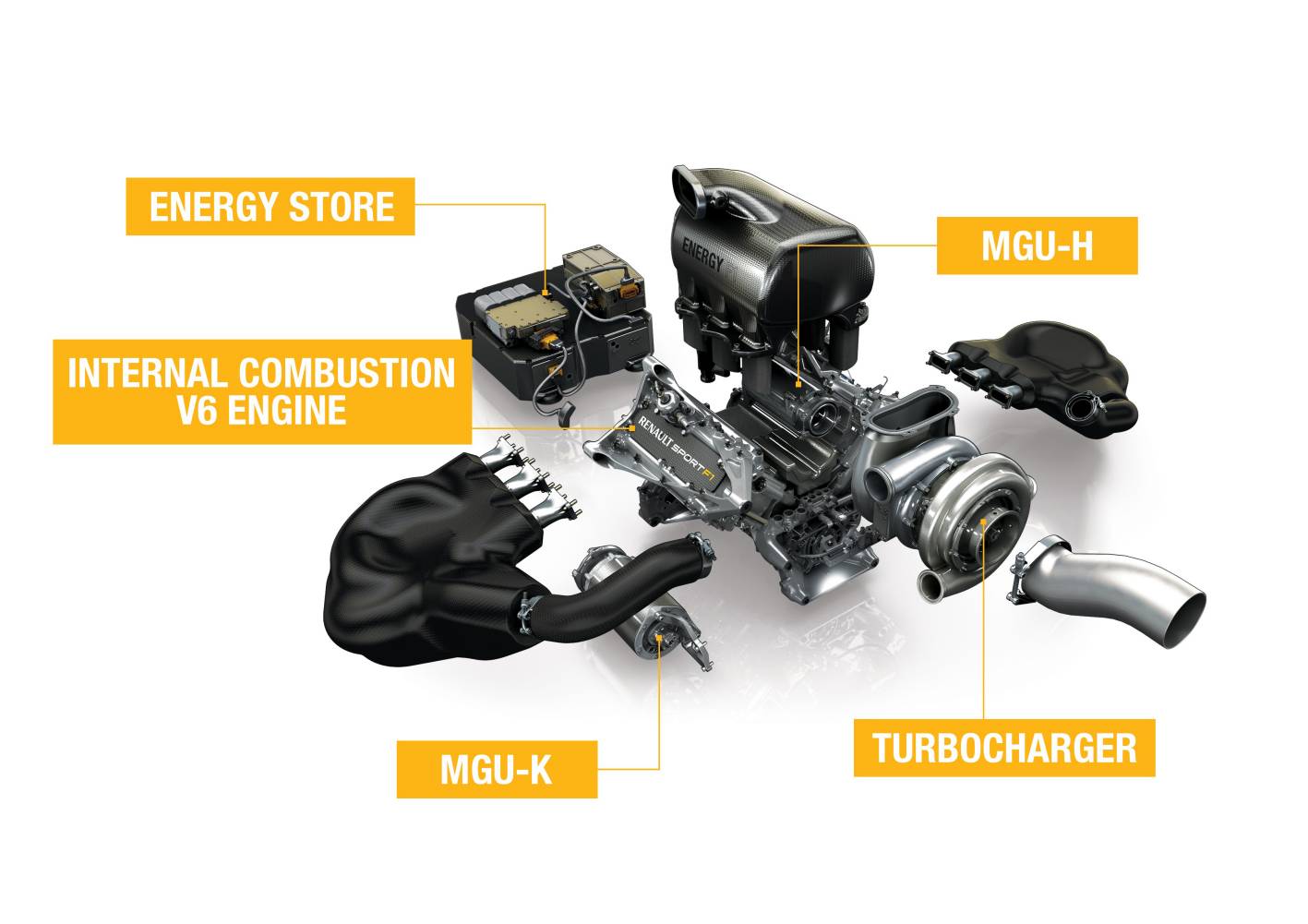
The components that make up the new F1 engine units
The regulations now stipulate, that if a team uses more than five of any component they will incur a penalty which could be as little as a five-place grid drop to as much as having to start from the pit lane.
The cars will also be different in appearance. The sidepods of the cars this season will be much wider to accommodate the extra heat produced by the ERS-H and ERS-K which can produce up to three times as much heat as the previous KERS system.
Introduction of race fuel limit
Last season teams were not confined to fuel limits under the regulations. A team used on average 160KG of fuel during a race. This season, a fuel limit of 100KG has been set meaning drivers will have to take driving style and fuel load into much consideration than they have ordinarily had to in the past. The efficiency of each teams power unit will be absolutely vital in deciding which teams and drivers will be able to push and which will have to be confined to a conservative driving style.
Eight-Speed fixed ratio gearboxes
In previous seasons, teams could select as many as 30 gear ratios before the seasons, which Ferrari used to great effect on many occasion, as did Red Bull, by gearing their cars with a longer seventh gear for tracks with a higher straight-line speed. This season, teams will be required to select just eight gear ratios that they will use at every track across the season which will prevent the advantages gained by Red Bull at tracks many considered they could not win last season. Vettel’s win at Montreal springs to mind. For the upcoming season the teams will be able to change the gear ratios once but the following season this luxury will not be available to them.
Front Wing
The front wing has been changed due to the amount of rear punctures seen in recent seasons as a result of the cars’ endplates depressurising competitors tyres. They have been reduced from 1,800 millimetres in length to just 1,650. The front wing is now vital due to its positioning in front of the front tyres. The aerodynamics of each and every car will be called into question and those teams that manage to direct airflow between the tyre and nose will undoubtedly witness large gains in downforce.
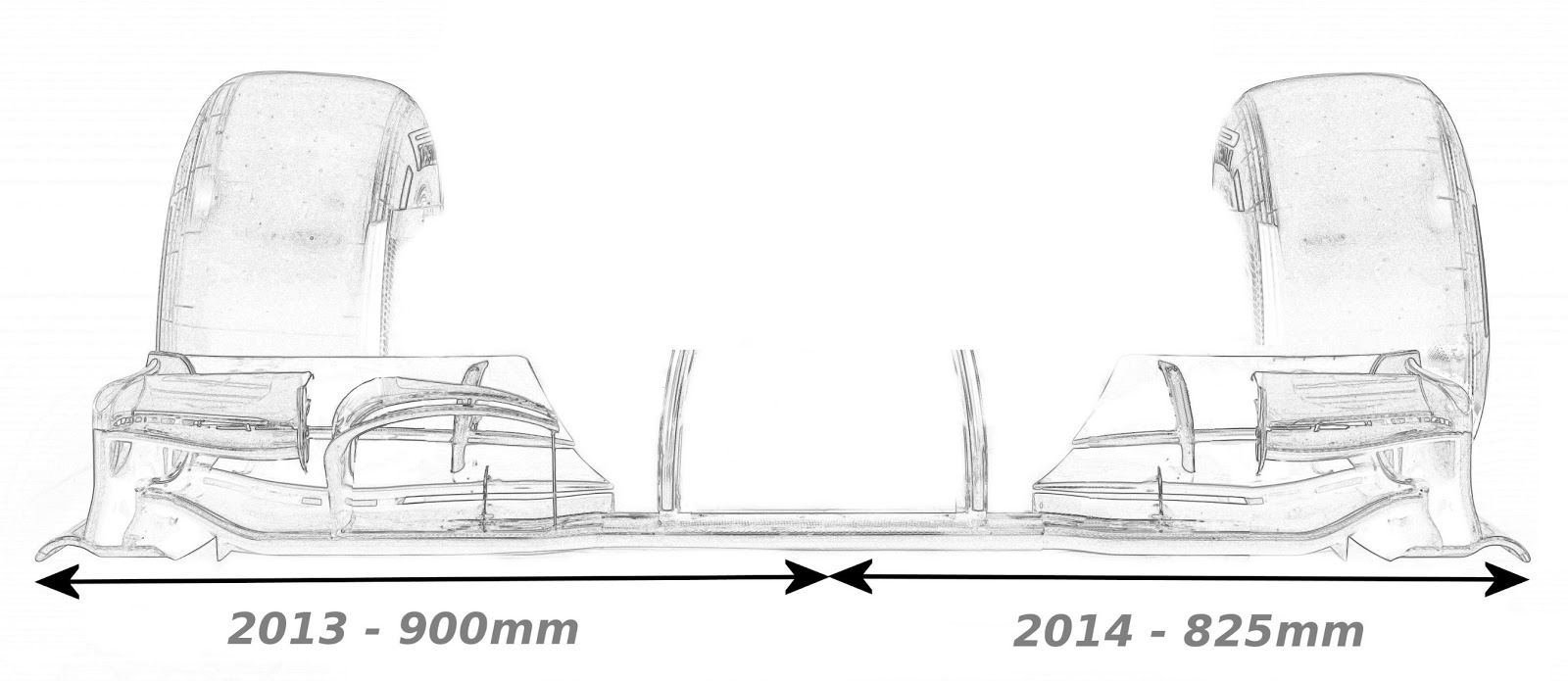
The front wing is now slightly narrower
Rear Wing
The rear wing flap has been made 20 millimetres smaller which has had the effect if making the flap shallower. Alongside this measure, the beam wing has also been abolished meaning teams with incredibly intelligent rear downforce set ups such as Red Bull, will be forced to reconsider how they make the rear wing operate to gain maximum aerodynamic gains. DRS (Drag Reductions System) will remain in the sport despite its controversial nature of being introduced to make the sport more exciting to watch. Many experts look down on it as a glorified overtake button. They will be shaking their heads in disbelief as the DRS flap has been made wider, giving the teams are slight advantage over last years regulations.
Weight
To introduce the new power units to the cars, the minimum wait has been increased from 642KG to 690KG. Taller, heavier drivers will therefore be at a disadvantage this season, with many people including myself tipping Nico Hülkenberg to do marvelous things within the sport, it now appears as though he could be in for a tough season.
Nose and Chassis
Both components of the car have been lowered. The chassis from 625 millimetres to 525 millimetres and the nose significantly so from 550 millimetres to 185 millimetres. The effect of this regulation is to prevent a car from launching into the air; examples include various drivers breaking their front wings and subsequently driving over them launching the car into the air. The aerodynamics of the car will once again be affected as air flow under the car will be substantially more difficult to control. Team aerodynamicist’s therefore have their work cut out to produce a chassis that will provide the necessary downforce to deal with the extra torque the cars now possess.
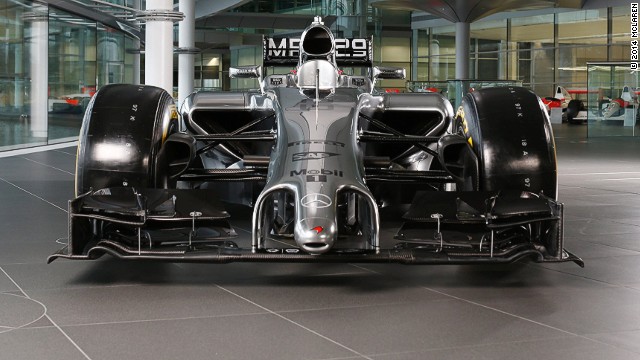
The chassis is closer to the ground to prevent the cars lifting in collisions
Blown diffusers outlawed
Teams are now required to run a single exhaust that exits the car centrally behind the rear wheel alignment. This will play havoc with teams such as Red Bull and Lotus who had mastered blown diffusers and were reaping the rewards the extra downforce provided them.
One thing a neutral fan of the sport may notice in these regulation changes is that many seem to have been targeted at Red Bull. Without a doubt, the sport has recognised the utter dominance of Vettel and the Milton Keynes outfit but with Adrian Newey at the helm or aerodynamics, despite a shaky start in testing, do not write off the Champions yet.
 Box, Box, Box.